


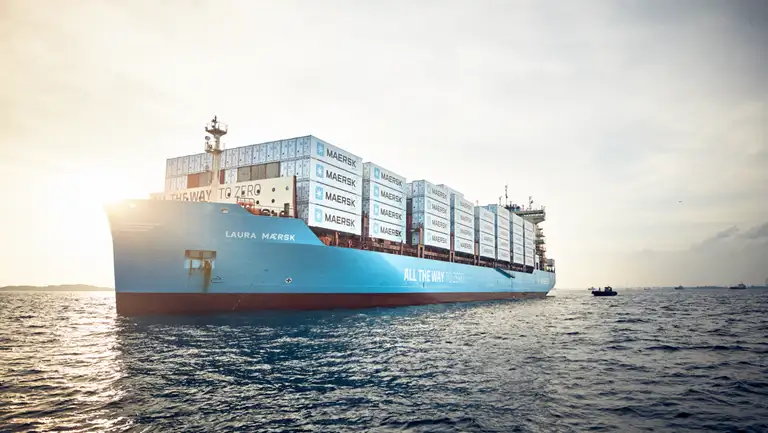
A.P. Moller–Maersk is testing the waters again, this time with a bold new fuel blend. The Danish shipping giant has begun onboard trials of a 90% methanol, 10% ethanol mixture on its dual-fuel container vessel, Laura Maersk. This ship already earned fame in 2023 as the first container vessel to run on green methanol. Now, Maersk wants to know: can adding ethanol make this greener path more scalable?
The fuel, nicknamed “E10”, is being closely monitored for combustion efficiency, ignition quality, lubricity, and nitrogen oxide (NOₓ) emissions. The test period will span about one to one-and-a-half months of real-time sailing conditions. Early data will determine whether ethanol’s chemical behavior disrupts or enhances engine performance—and, crucially, whether this blend can be scaled.
Why ethanol? Availability. While green methanol is central to Maersk’s decarbonisation roadmap, its supply chain is still maturing. Ethanol, on the other hand, is more widely produced from biomass, agricultural waste, and even municipal waste. By blending the two, Maersk is essentially expanding the pool of viable fuel sources that can power its growing fleet of dual-fuel vessels.
“This is about making the future fuel mix more flexible,” said Peter Normark Sørensen, senior fuel transition manager at Maersk. “We’re not just testing emissions—we’re testing supply resilience.”
But the move also raises questions. How will ethanol blends affect ship engine wear over time? Will bunkering infrastructure be able to handle varying compositions of mixed alcohol fuels? And perhaps most importantly: will regulators support ethanol-methanol blends under upcoming carbon accounting rules like the EU ETS or FuelEU Maritime?
Maersk is gambling that innovation on the engine side must be matched by experimentation on the fuel side. The industry has no time to wait for a perfect zero-carbon fuel—viable, scalable options must be tested now, even if they aren’t flawless. If the E10 blend performs well, it could become an interim standard across parts of Maersk’s fleet and possibly across the broader shipping sector. In a world racing toward net-zero targets, “good enough” alternatives that can scale quickly may matter more than ideal solutions that arrive too late.


